

Wow Remote Teams helps U.S. architecture and AEC firms hire bilingual professionals from Latin America for CAD, Revit, BIM, and visualization production work. Our nearshore teams work inside your systems, follow your standards, and collaborate in real time during U.S. business hours.
The result: cost efficiency of up to 70% versus traditional hiring models, with cultural alignment that makes your LATAM talent feel like part of the office, not a vendor on another continent.
What Nearshore Architecture Staffing Actually Means
We work with AEC firms every day that need more hands in Revit and AutoCAD but cannot wait three months for a local hire to accept an offer.
Nearshore architecture staffing solves that problem by placing Latin American architecture and AEC professionals who log into your firm’s own CAD or BIM platforms, follow your drawing standards, layer conventions, and title blocks, and report through your internal review structure.
This is an operational model where companies partner with nearby countries for integrated production support, not a handoff to an outside design firm.
This is different from outsourcing an entire design package to a third-party architecture studio or a generic offshore staffing vendor. Your firm keeps design control, file ownership, and final approval authority.
Nearshore architecture staffing connects U.S. companies with Latin American professionals who function as dedicated team members on your projects, covering roles like production drafters, Revit modelers, BIM coordinators, visualization specialists, and AEC project support.
We offer three service models: Staffing, Direct Hire, and Staff-to-Hire.
| Model | Integration Level | File Control | Real-Time Collaboration |
| Architecture Nearshore Staffing | High; works inside your Revit/CAD environment, follows your standards | Firm retains full ownership and access | High; same or overlapping time zones, live markups and screen-sharing |
| Outsourced CAD/BIM Service | Moderate to low; vendor manages its own tools and QA | Vendor often controls file structure; less direct oversight | Lower; batch delivery, asynchronous feedback common |
| Local U.S. Drafter Hire | High; fully embedded in office | Full access and control | Very high; in-person or same-day communication |
The Hiring Problem in Architecture and AEC Right Now
Project pipelines in multifamily, infrastructure, and commercial interiors have expanded through 2025 and into 2026, but U.S. firms cannot hire Revit and CAD production staff fast enough to keep pace. The gap between available work and available people is widening, and it shows up first in production.
82% of construction firms report difficulty filling hourly craft positions, and 80% report difficulty filling salaried roles, according to the AGC/Sage 2026 Construction Hiring and Business Outlook, the highest share in the past three years. AGC’s data covers contractors broadly rather than architecture firms specifically, but it’s the standard industry reference point for AEC-wide labor pressure.
NCARB’s most recent data shows the number of licensed U.S. architects rose 6% in 2025 to just over 123,000, recovering from a 4% dip to 116,000 in 2024.
The longer-term pressure NCARB flags is demographic, not just cyclical: architects over 65 now make up 14% of the licensed population, while those under 30 account for just 3%.
Time from starting college to earning a license still averages close to 13 years, per NCARB by the Numbers, which means the pipeline of newly licensed professionals cannot close a gap quickly even as more candidates enter it.
This pressure is acute in architecture because licensure requirements restrict who can make code, life-safety, and design decisions.
When production roles sit empty, licensed architects and senior designers absorb redline work, sheet setup, and model cleanup.
That pulls them away from code-critical reviews, client coordination, and design leadership. Seasonal surges around entitlement deadlines and large bid packages amplify the problem.
The concrete cost: delayed drawing sets, RFI spikes from incomplete documents, missed permit submittals, and burnout among senior project architects who cannot sustain production-plus-design workloads indefinitely. Nearshore staffing helps by tapping into regional markets where trained AEC professionals are available and ready to work.
Nearshore Staffing vs Other Ways to Add Architecture Capacity
Before choosing a model, map the real options. Each one fits a different situation, and none is universally better.
Nearshore architecture staffing means building a dedicated remote team across Latin America that works inside your Revit models, CAD files, and BIM standards. Your licensed professionals handle review and final sign-off. Nearshore staffing offers a larger talent pool than local recruiting, and teams can scale up or down based on project volume.
Outsourced CAD/BIM services send drawing packages or models to a third-party vendor that manages its own team, tools, and quality checks. The vendor owns more of the process, and your firm typically has less direct control over file structure and naming.
Hiring freelancers offers flexibility but inconsistent availability. Familiarity with U.S. codes and your office standards varies, and management overhead per hour saved can be high.
Hiring freelancers works best for one-off tasks, not ongoing production.
Local in-house hiring gives maximum control and cultural alignment but comes with the highest cost structure and the longest time to fill, especially in markets outside major metros.
| Criteria | Nearshore Staffing | Outsourced CAD/BIM | Freelancers | Local In-House Hire |
| Control over standards & files | High; your systems, your standards | Moderate; vendor manages internally | Variable; depends on individual | Full |
| Cost efficiency | 30 to 70% lower than U.S. salaries | Varies; package pricing, hidden coordination costs | Hourly rates vary; management overhead adds up | Highest total cost |
| File ownership | Firm retains ownership | Often shared or vendor-controlled | Firm retains ownership | Firm retains ownership |
| Real-time collaboration | Yes; same or within 1 to 3 hour time zones | Limited; often asynchronous | Inconsistent | Yes |
| Ramp speed | Days to weeks | Weeks to months | Fast for individuals, slow to scale | 40 to 50 days average for AEC roles |
| Best for | Ongoing production capacity, BIM support | Large batch deliverables, overflow | Short-term, defined-scope tasks | Core team, leadership roles |
Roles We Help You Hire in Architecture and AEC
We organize architecture roles by function so you can match your production gaps to the right nearshore talent. For each group below, design authority and licensed review remain with your U.S. team.
| Function | Roles | Tools & Software | What Stays With Your Firm |
| Drafting & Documentation | Architectural CAD technicians, civil/structural drafters, documentation specialists | AutoCAD, Civil 3D, MicroStation | Code interpretation, dimension verification, final sheet approval |
| Revit & BIM Production | Revit modelers, BIM technicians, detailers | Revit, Navisworks, BIM 360, Autodesk Construction Cloud | Model audit sign-off, clash resolution decisions, licensed review of coordinated sets |
| Design & Visualization | Architectural designers, 3D modelers, visualization specialists | SketchUp, Rhino, Enscape, Lumion, V-Ray, Twinmotion | Conceptual direction, design intent, final design authority |
| Coordination & Project Support | BIM coordinators, AEC project assistants, specification support, document controllers | Bluebeam, Procore, Asana, Monday.com | Stamping, life-safety decisions, architect of record responsibilities |
Drafting and documentation roles handle the production backbone: drawing sets, detail sheets, and redline incorporation.
These professionals work inside your AutoCAD or Civil 3D templates, using your layer conventions and title blocks. Design decisions and code interpretation stay with your licensed staff.
Revit and BIM production is where most firms feel the capacity crunch first.
Nearshore Revit modelers build model elements, set up sheets, create and modify families, and prepare views for clash-detection review in Navisworks. Your senior staff focuses on model audits and coordination decisions rather than element-level modeling.
Design and visualization specialists create renderings, walkthroughs, and presentation graphics using tools like Enscape, Lumion, or V-Ray.
The U.S. firm retains conceptual direction and final design authority; the nearshore professional executes the visual output.
Coordination and project support roles keep documentation organized and workflows moving.
BIM coordinators prep models for review, project assistants track RFIs and submittals in Procore, and document controllers manage file versioning in Bluebeam. Beyond AEC, companies also commonly hire customer support representatives, software developers, QA engineers, and cloud specialists through nearshore staffing to fill specialized skills gaps across their operations.
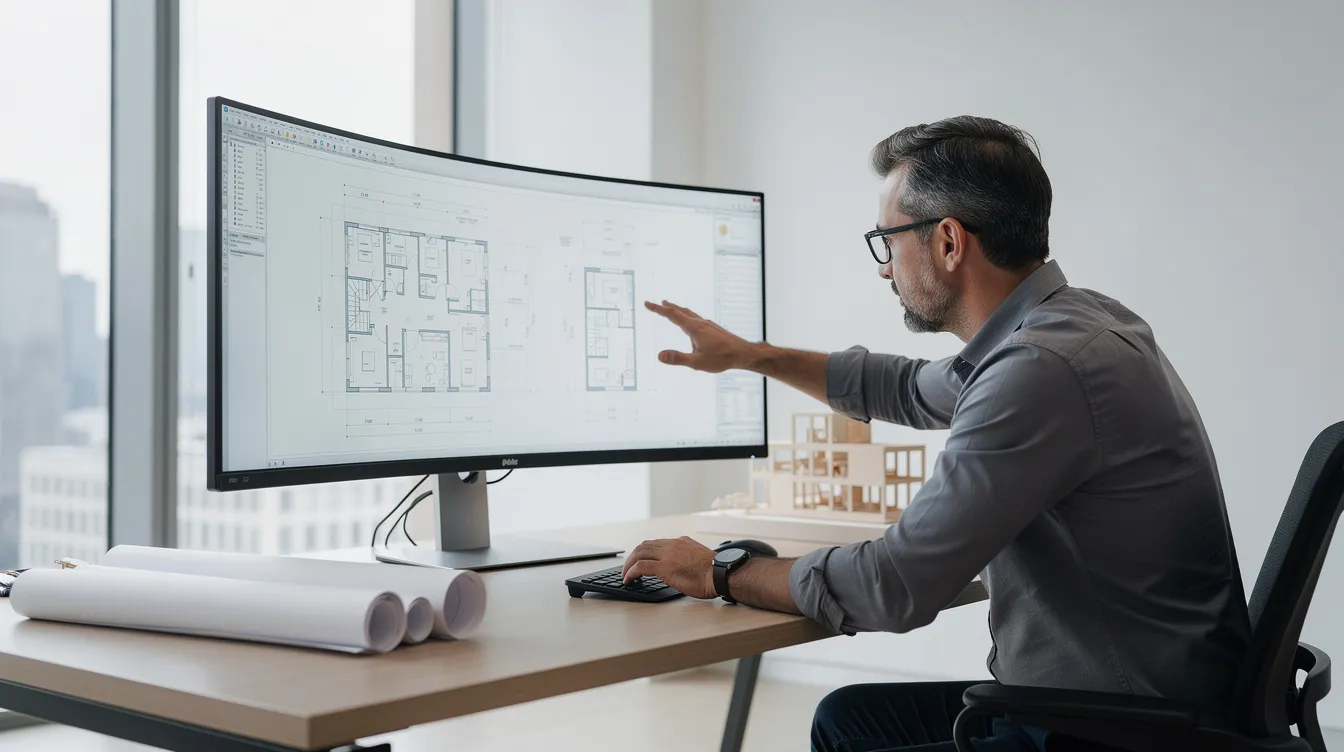
How Our Nearshore Architecture Staffing Process Works
The entire nearshore process runs from discovery to ongoing support. Here is what each step covers.
Discovery. We document your software stack (AutoCAD, Revit, BIM 360, Bluebeam, or others), drawing standards, file naming conventions, and access requirements. We also identify who on your team will serve as the designated reviewer for each nearshore professional.
This step eliminates the most common stall point: missing standards documentation or no named reviewer on the firm’s side.
Targeted Sourcing and Screening. We source candidates from across Latin America and evaluate them through portfolio review, CAD or Revit test exercises matched to your project types, English fluency screening, and AEC-specific experience checks.
Experience with U.S. commercial, residential, healthcare, or industrial projects is weighted based on your firm’s focus. This is where talent quality is confirmed before you see a single resume.
Candidate Presentation. We typically present three to five pre-vetted candidates within three to seven business days of completing discovery, consistent with our placement data across other functions. This is where nearshore hiring improves speed: filling roles in days and weeks, not months.
Your Interviews and Selection. Your team interviews finalists via Zoom or Teams, reviews portfolios and test drawings, and selects the best-fit professionals. You choose who joins your team.
Onboarding and Integration. We coordinate access setup, NDAs, introduction to your standards manuals, and first-week pairing with an internal mentor. The new hire joins daily meetings and existing workflows from the first week.
This structured start avoids the drift that happens when a new team member logs in without clear direction or a point of contact.
Ongoing Support. Periodic check-ins and performance feedback loops keep the engagement on track. If the relationship matures, you can move from Staffing to Direct Hire, or to Staff-to-Hire as a bridge, at your discretion.
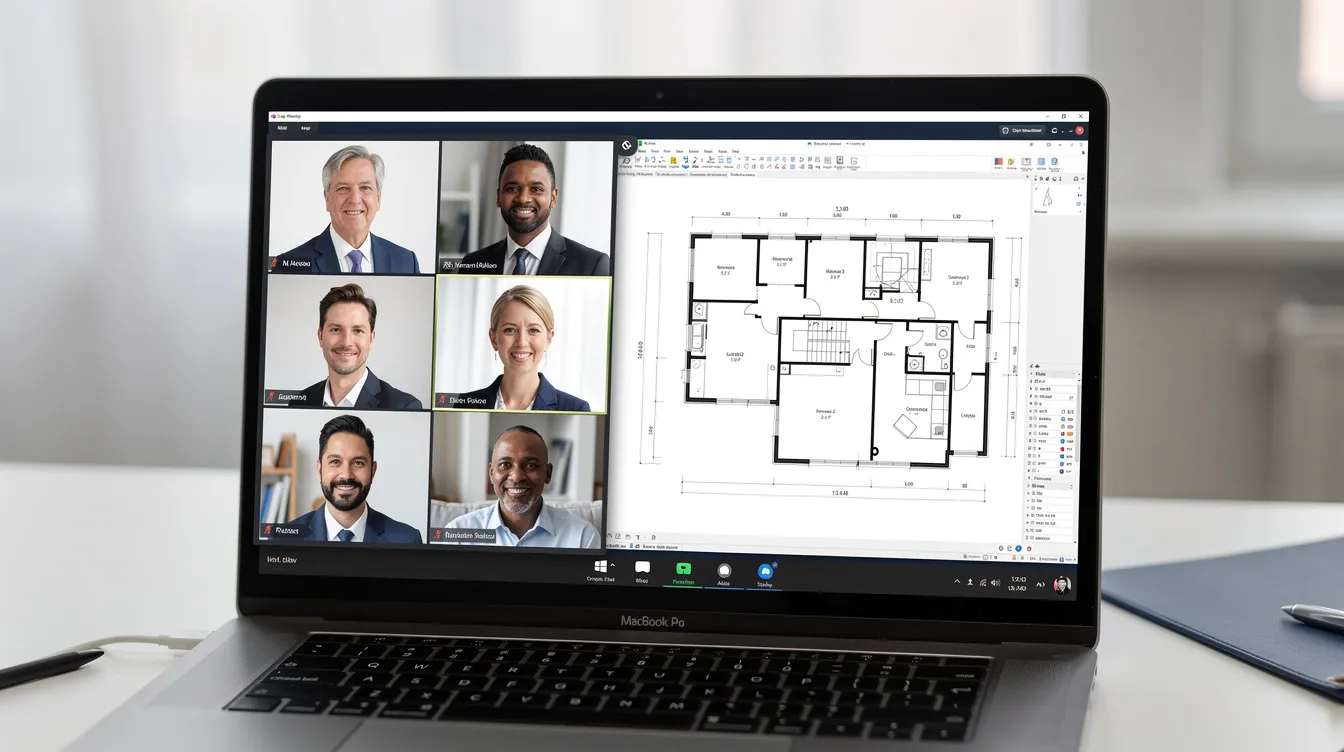
Share your next project’s production needs: tell us about your Revit, CAD, or BIM staffing gaps. We will match you with experienced professionals from Latin America.
Why Nearshore Works Specifically for Architecture and AEC Teams
Nearshore teams work during U.S. business hours for real-time collaboration, with time zone alignment typically within 1 to 3 hours of your office. That means redlines sent at 4 p.m.
Eastern can be picked up the same afternoon. Live screen-share markups in Revit or Bluebeam happen during your working day, not on a 24-hour delay.
Nearshore teams typically have better time-zone alignment than offshore teams, and Latin America has a growing pool of skilled professionals in architecture, civil engineering, and industrial design.
BIM adoption across the region backs this up: in Chile, 76% of BIM users report Revit as their primary tool, and roughly 80% of Chilean AEC professionals report at least some BIM experience, according to the University of Chile’s National BIM Survey.
Major LATAM hubs like Mexico City, Bogotá, Buenos Aires, and São Paulo graduate large cohorts of AEC professionals familiar with AutoCAD, Revit, SketchUp, and Lumion. These are experienced professionals supporting project types that U.S. firms run daily: multifamily housing, commercial interiors, retail rollouts, and mixed-use developments.
The honest limit: nearshore is weaker for roles requiring in-person site presence, same-day physical field verification, or jurisdiction-specific inspections that demand a local license.
For production, modeling, visualization, and documentation work, nearshore staffing delivers cost savings of up to 70% versus equivalent roles in the U.S. while keeping your licensed architects focused on design, code review, and client relationships.
Staffing, Direct Hire, and Staff-to-Hire: Choosing Your Model
Wow Remote Teams offers three ways for architecture firms to work with nearshore talent. Each fits a different stage of commitment and hiring strategy.
Staffing is an ongoing service. We source, vet, and place dedicated nearshore team members who work on your projects. We handle administrative coordination and monthly payments so your firm avoids paperwork overhead.
This model works well for firms that need fast-start production capacity without a permanent headcount decision. Nearshore staffing lets firms scale teams without long-term commitments, a core advantage for firms that need extra production capacity.
Direct Hire is for firms that know they want a permanent addition. We source and present candidates, and you pay a one-time fee only if you decide to hire someone we present. No ongoing payments, no long-term service contract.
Staff-to-Hire is an optional bridge. Your firm works with a professional through the Staffing model first, evaluating fit and performance over time. If you want to bring that person onto your own team permanently, a structured transition is available.
The transition fee decreases over time but never reaches zero. Conversion is available but never required; many firms stay on the Staffing model indefinitely.
| Staffing | Direct Hire | |
| Who handles ongoing payments | Wow Remote Teams | Your firm (after hire) |
| Level of commitment | Flexible; adjust as project needs shift | One-time engagement |
| Best fit | Ongoing production, BIM support, seasonal surge | Filling a known permanent role |
See our pricing page for full model breakdowns, including nearshore staff augmentation.
Standards, File Access, and Licensed Review: What Stays With Your Team
CAD and BIM standards are the backbone of a successful nearshore architecture staffing engagement.
Before your nearshore professional’s first assignment, your firm needs to document and hand over templates, title blocks, view templates, Revit families, layer and line-weight conventions, and sheet and view naming rules. Firms that skip this step lose weeks to rework and miscommunication.
Firms that invest a few hours upfront get production output that matches their in-house work from the first drawing set.
File permissions should follow role-based access. In BIM 360, Autodesk Construction Cloud, or on-premise servers, a drafter or modeler gets the access needed to complete assignments, not central model administrator rights.
This protects file integrity, limits accidental overwrites, and keeps your project structure clean.
Every deliverable from a nearshore professional needs a named internal reviewer.
This is not optional.
A licensed architect or senior designer on your team checks geometry, dimensions, notes, and coordination before anything leaves the office or gets submitted. The review loop is what maintains quality, and it mirrors how your firm already reviews work from junior in-house staff.
What remains with your firm’s licensed professionals: stamping, code interpretation, life-safety and egress decisions, structural and envelope strategies, and architect of record responsibilities. Wow Remote Teams supports the talent and workflow side of the engagement. We do not replace licensed professional responsibility or take on architect-of-record roles.
Cost Efficiency and Talent Availability With LATAM Nearshore Architecture Teams
Nearshore staffing cost can be 30 to 70% lower than U.S. salaries for equivalent AEC production roles. This lower staffing cost often saves companies $35,000 to $64,000 per hire annually when working with LATAM talent instead of local U.S. hires.
These savings translate to strategic outcomes.
Firms can keep licensed architects focused on design and code review instead of pulling them into production. Deeper benches for large Revit models become affordable. Project delivery smooths out instead of cycling between overload during bid season and underutilization between projects.
Talent availability in LATAM markets supports this.
Mexico City, Bogotá, Buenos Aires, and São Paulo each graduate large classes of architecture, civil, and industrial design professionals who train on AutoCAD, Revit, SketchUp, and Lumion. This contrasts with U.S. talent shortages where traditional hiring models struggle to fill AEC production roles quickly.
The local market for Revit modelers and BIM technicians in many U.S. metros has fewer qualified candidates than open positions, while the LATAM talent pool continues to grow.
How Nearshore Architecture Staffing Compares to Offshore Outsourcing
Nearshore architectural staffing places professionals in Latin America, within one to three time zones of your U.S. office, who log into your systems and attend your meetings.
Offshore outsourcing typically routes work to teams in Asia or Eastern Europe, eight to twelve hours away, often structured as project-based or package-based delivery with minimal daily interaction.
For architecture and AEC work, the difference matters in practice. Unlike traditional outsourcing, this model gives firms dedicated team members embedded in daily workflows.
Nearshore architecture teams work your hours for real time collaboration on markups, RFIs, and coordination meetings. Real-time collaboration eliminates delays in project execution that accumulate when feedback loops span 24 hours.
Nearshore staffing allows teams to resolve issues in minutes rather than waiting for the next business day in a distant time zone.
Cultural alignment adds another layer. Latin American professionals are familiar with U.S. client expectations, scheduling norms, and direct communication styles. Offshore outsourcing sometimes introduces wider gaps in work culture that require additional project managers or liaison roles to bridge.
While offshore staffing can be cheaper on pure hourly rate, hidden coordination costs, rework from miscommunication, and the overhead of asynchronous handoffs frequently erode those savings in complex CAD and BIM workflows.
Architecture firms needing same-day responses, integrated BIM work, and close coordination with licensed staff are better served by nearshore staffing than by generic offshore outsourcing.
Why Architecture and AEC Firms Choose Wow Remote Teams
Wow Remote Teams operates as a transparent nearshore staffing partner, not a volume-driven offshore staffing agency. We focus on long-term relationships with U.S. companies in architecture and AEC rather than cycling through short-term placements.
Our pricing is visible, our process is documented, and our service models give firms flexibility rather than lock-in.
The Staffing, Direct Hire, and Staff-to-Hire structure is a core differentiator. Firms start with the model that fits their current risk tolerance and evolve as the relationship proves itself.
A firm might begin with Staffing for a Revit modeler on a six-month project, then convert that person to Staff-to-Hire after seeing consistent output, or use Direct Hire to fill a permanent BIM coordinator seat. Our vetting process focuses on AEC-specific tool fluency, portfolio depth, and English proficiency.
These hires can help firms build or extend engineering teams around BIM, coordination, and technical production needs.
Our team understands U.S. project workflows from schematic design through construction documentation.
Collaboration, Communication, and Cultural Alignment With LATAM Architecture Teams
Nearshore professionals can attend daily standups and meetings live because they share your working hours. A Revit modeler in Bogotá joins your 9:30 a.m.
Eastern coordination call, picks up redlines in Bluebeam after the meeting, and posts updated to BIM 360 before your project architect reviews them at 3 p.m. Nearshore staff become integrated team members who work like part of U.S. teams, attending daily meetings, using shared Slack or Microsoft Teams channels, and responding within your documented turnaround expectations.
Employers can reduce communication friction with nearshore staffing due to similar cultural norms and alignment with U.S. business practices.
Latin American professionals share a direct communication style, comfort with iterative feedback, and familiarity with U.S. deadlines. Cultural proximity reduces friction in project management that firms sometimes experience with offshore outsourcing or fragmented freelancer arrangements.
Geographical proximity facilitates cost-effective face-to-face meetings and team-building activities when firms want to deepen the relationship.
Proximity simplifies physical visits for project oversight compared to offshore teams located across oceans. Practical collaboration setups include shared cloud drives, BIM 360 or ACC projects, dedicated Slack or Teams channels per project, and documented response-time expectations. The result is a permanent team feel with the cost structure of international hiring.

FAQ Architecture & AEC Nearshore Staffing
What is nearshore architecture staffing?
Nearshore architecture staffing is hiring AEC professionals from Latin America who work inside your firm’s CAD or BIM systems, follow your drawing standards, and report through your review structure. They function as part of your in-house team, not as an outside vendor delivering finished packages. The firm retains design control, file ownership, and all licensed review authority.
Which architecture and AEC roles can be staffed nearshore with Wow Remote Teams?
We place production drafters, Revit modelers, BIM technicians, detailers, visualization specialists, BIM coordinators, document controllers, and AEC project support staff. Roles are grouped by function: drafting and documentation, Revit and BIM production, design and visualization, and coordination and project support. Each role works under your firm’s licensed reviewers.
Can a nearshore professional replace a licensed architect on my project?
No. Stamping, code interpretation, life-safety decisions, structural design, and architect of record responsibilities stay with your U.S.-licensed professionals. Nearshore team members handle production, modeling, visualization, and documentation under your firm’s review structure. They support licensed staff; they do not replace them.
What software experience do your architecture candidates typically have?
Candidates are screened for tools specific to AEC production: AutoCAD, Revit, Civil 3D, Navisworks, BIM 360, SketchUp, Rhino, Enscape, Lumion, V-Ray, Twinmotion, Bluebeam, and Procore. We match technical assessments to the tools and project types your firm uses, verifying both technical skills and portfolio quality before presenting candidates.
How is this different from hiring an outsourced CAD or BIM service?
An outsourced service manages its own team, tools, and quality checks, then delivers finished drawings or models. Nearshore staffing places skilled professionals inside your systems, working under your standards and your reviewers. You maintain file control, direct feedback loops, and daily oversight, which is closer to how you manage your local team than how you manage a vendor.
Does Wow Remote Teams support both Staffing and Direct Hire for architecture roles?
Yes. We offer Staffing for ongoing dedicated team members, Direct Hire for one-time candidate sourcing when you want to bring someone onto your own team, and Staff-to-Hire as an optional bridge between the two. You choose the approach that fits your firm’s hiring strategy.
How fast can you present candidates for a Revit or CAD position?
We typically present a shortlist of three to five pre-vetted candidates within three to seven business days of completing the discovery step. Nearshore staffing improves hiring speed compared to local U.S. recruiting, where AEC production roles routinely take 40 to 50 days to fill.
What time zone overlap can we expect with Latin American nearshore talent?
Nearshore staffing typically involves time zone alignment within 1 to 3 hours of U.S. Eastern or Central time. Professionals in Mexico, Colombia, Argentina, and Brazil work during your business hours, enabling same-day redline pickup, live screen-share markups, and participation in daily meetings without overnight delays.


